

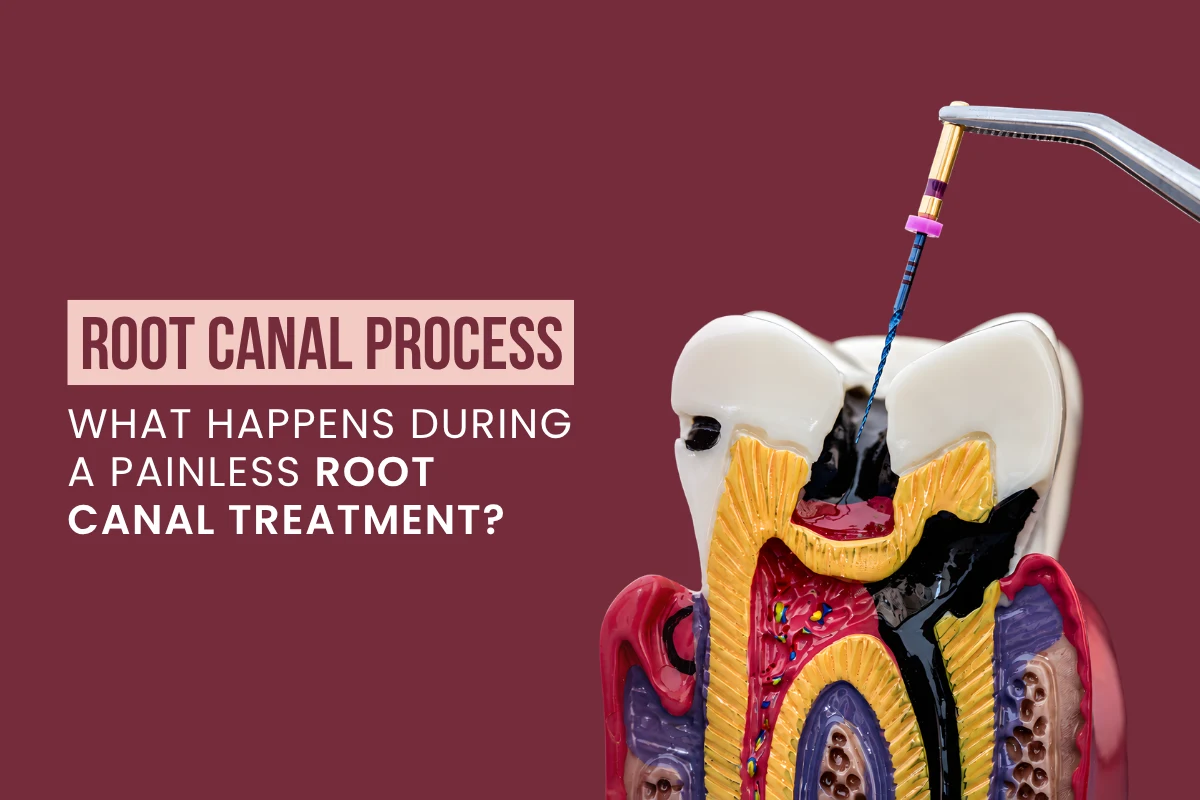
For many people, hearing the words “root canal” can cause anxiety. Unfortunately, root canal treatment has gained a reputation for being painful, even though modern dentistry has transformed it into a comfortable and highly effective procedure.
In reality, a Painless Root Canal Treatment is designed to relieve pain caused by infection inside the tooth, not create it. With advanced techniques, modern anaesthesia, and improved dental technology, most patients are surprised by how comfortable the procedure actually is.
If your dentist has recommended a root canal, understanding what happens during the treatment can help ease your concerns and prepare you for a smooth experience.
What Is a Root Canal Treatment?
Inside every tooth is a soft tissue called the pulp, which contains nerves and blood vessels. When this pulp becomes infected or inflamed due to deep decay, cracks, trauma, or repeated dental procedures, treatment is needed to save the tooth.
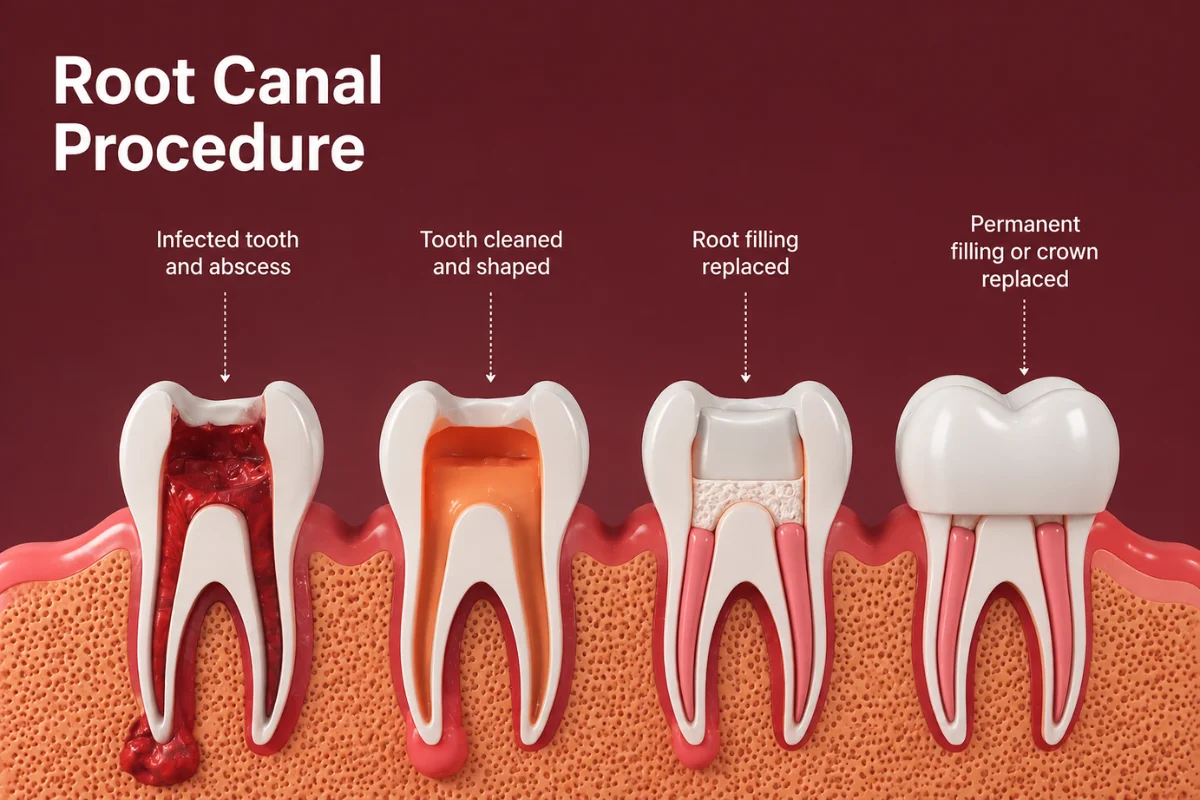
A root canal removes the infected pulp, cleans the inside of the tooth, and seals it to prevent future infection.
The goal of Painless Root Canal Treatment is to eliminate infection while preserving your natural tooth.
When Do You Need a Root Canal?
Your dentist or Root Canal Doctor may recommend treatment if you experience:
- Persistent tooth pain
- Sensitivity to hot or cold that lingers
- Pain while chewing
- Swelling around the gums
- A dental abscess
- Tooth discolouration
- Deep decay reaching the nerve
Treating the problem early often helps prevent complications and may save the tooth from extraction.
Step 1: Examination and Diagnosis
The first step is a detailed examination.
Your dentist will assess your symptoms, examine the affected tooth, and take dental X-rays to determine the extent of infection.
The images help the Root Canal Specialist evaluate:
- The condition of the tooth roots
- The extent of infection
- Bone health around the tooth
- Whether root canal treatment is the most suitable option
Once the diagnosis is confirmed, a treatment plan is created.
Step 2: Local Anaesthesia
This step surprises most patients.
Before starting the procedure, the area around the tooth is thoroughly numbed using local anaesthesia.
The goal is to ensure you remain comfortable throughout the treatment.
Most patients feel pressure during the procedure but should not experience pain. Modern anaesthetic techniques are one of the main reasons why Painless Root Canal Treatment is now possible.
Step 3: Isolating the Tooth
A protective dental sheet called a rubber dam is placed around the tooth.
This helps:
- Keep the treatment area clean
- Prevent saliva from entering the tooth
- Improve visibility for the dentist
- Enhance patient safety
The isolation also allows the dentist to work more efficiently.
Step 4: Creating Access to the Tooth
The dentist creates a small opening in the top of the tooth to access the infected pulp chamber.
Through this opening, the infected tissue can be safely removed.
Patients generally do not feel pain during this stage because the tooth is fully numbed.
Step 5: Removing the Infected Pulp
This is the most important part of the procedure.
The Root Canal Doctor carefully removes the damaged or infected pulp tissue from inside the tooth and root canals.
Special instruments are used to clean the canals thoroughly and remove bacteria and debris.
Once the infected tissue is removed, the source of the pain is eliminated.
Step 6: Cleaning and Shaping the Root Canals
After removing the infected pulp, the root canals are cleaned and shaped.
This step ensures that:
- Bacteria are removed
- The canals are disinfected
- The canals are prepared for filling
Advanced endodontic instruments allow the Root Canal Specialist to perform this process with great precision.
Step 7: Filling the Root Canals
Once the canals are completely cleaned, they are filled with a biocompatible material called gutta-percha.
This seals the root canals and prevents bacteria from re-entering the tooth.
Proper sealing is essential for the long-term success of the treatment.
Step 8: Temporary or Permanent Restoration
After the root canal is completed, the access opening is sealed.
Depending on the condition of the tooth, your dentist may place:
- A temporary filling
- A permanent filling
- A dental crown
Many teeth that undergo root canal treatment benefit from a crown because it provides additional strength and protection.
Your dentist will recommend the most suitable restoration based on the amount of remaining tooth structure.
What Will You Feel After the Treatment?
Most patients experience very little discomfort after a Painless Root Canal Treatment.
You may notice:
- Mild tenderness for a few days
- Slight sensitivity while chewing
- Temporary soreness around the treated tooth
These symptoms usually improve quickly and can often be managed with medications recommended by your dentist.
The severe pain caused by the infection is typically gone once the treatment is completed.
How Long Does Root Canal Treatment Take?
The length of treatment depends on:
- The number of roots involved
- The complexity of the tooth
- The severity of the infection
Some cases can be completed in a single visit, while others may require two appointments.
Your Root Canal Doctor will explain the expected treatment timeline during your consultation.
Common Myths About Root Canal Treatment
Myth 1: Root Canals Are Painful
Modern root canal procedures are designed to relieve pain, not cause it.
Myth 2: Tooth Extraction Is Better
Whenever possible, preserving your natural tooth is usually the preferred option.
Myth 3: Recovery Takes a Long Time
Most patients return to their normal routine within a day.
Myth 4: Root Canals Always Require Multiple Visits
Many cases can now be completed in one visit, depending on the condition of the tooth.
Benefits of Painless Root Canal Treatment
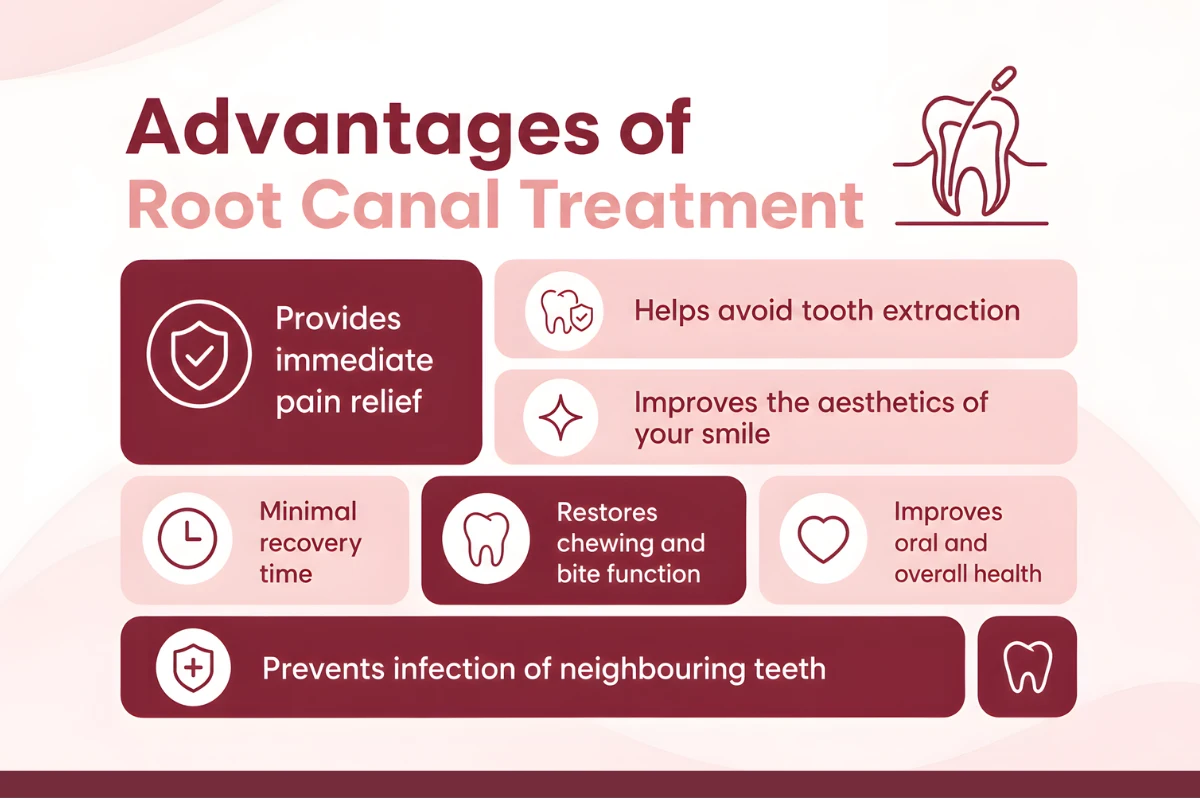
A successful root canal can:
- Eliminate infection
- Relieve pain
- Save your natural tooth
- Restore normal chewing function
- Prevent tooth extraction
- Protect surrounding teeth
- Improve long-term oral health
This is why dentists often recommend saving the natural tooth whenever possible.
How to Care for Your Tooth After Treatment
To maintain the health of your treated tooth:
- Brush twice daily
- Floss regularly
- Attend routine dental check-ups
- Avoid chewing hard objects
- Follow your dentist’s recommendations regarding crowns or restorations
Good oral hygiene helps ensure long-term success.
Final Thoughts
Modern Painless Root Canal Treatment is a safe, comfortable, and highly effective way to save an infected tooth. With today’s techniques and technology, the procedure is often much easier than patients expect.
If you are experiencing tooth pain, sensitivity, or signs of infection, early treatment can prevent complications and help preserve your natural tooth. At Studio Dentiica, Dr Swati Thongire Gurav provides comprehensive dental care and guides patients through every step of their treatment with comfort and confidence.
Phone: 07400455007
WhatsApp: 7400455007
Book your consultation today and take the first step towards a healthier, pain-free smile.