

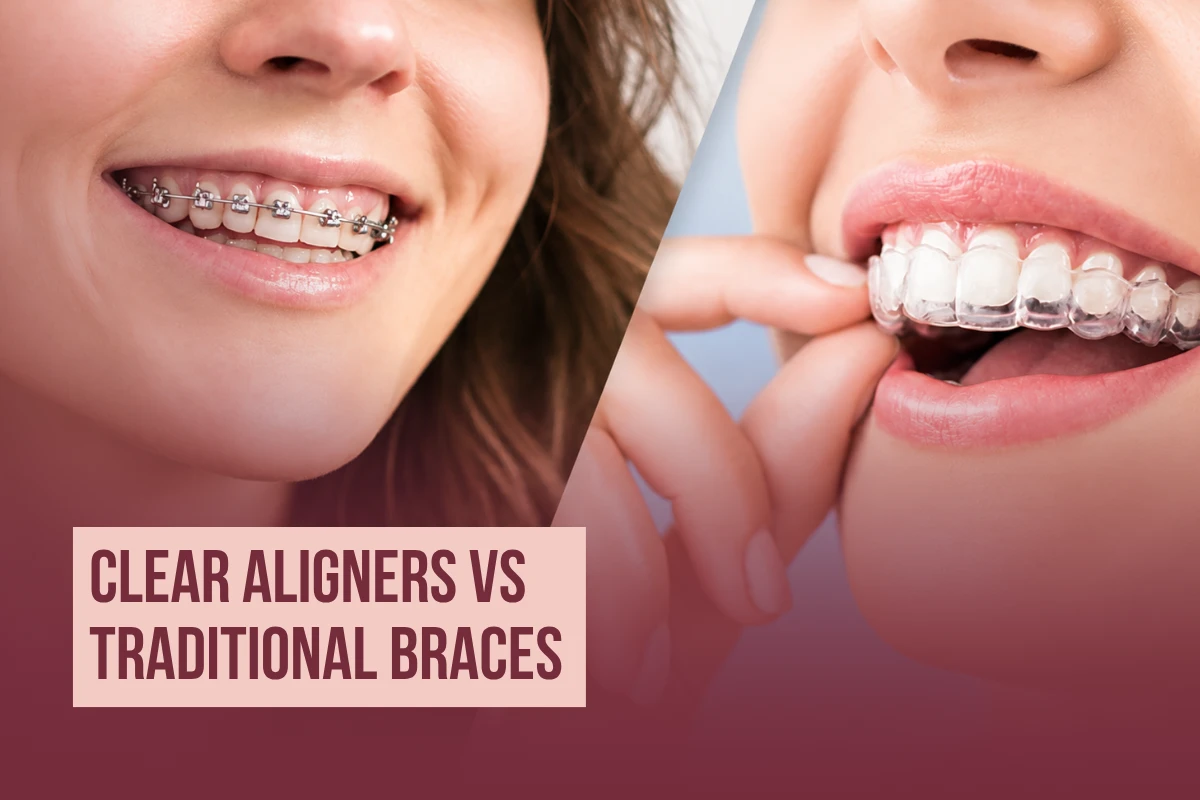
If you are planning to correct crooked teeth, gaps, crowding, or bite issues, you may be confused between Clear Aligners and traditional braces. Both options can straighten teeth, but the experience, appearance, comfort, cost, and maintenance are different.
For many patients in Thane, the right choice depends on lifestyle, dental condition, age, discipline, and treatment goals. A proper consultation helps decide whether aligners or Braces Treatment will work better for your smile.
What Are Clear Aligners?
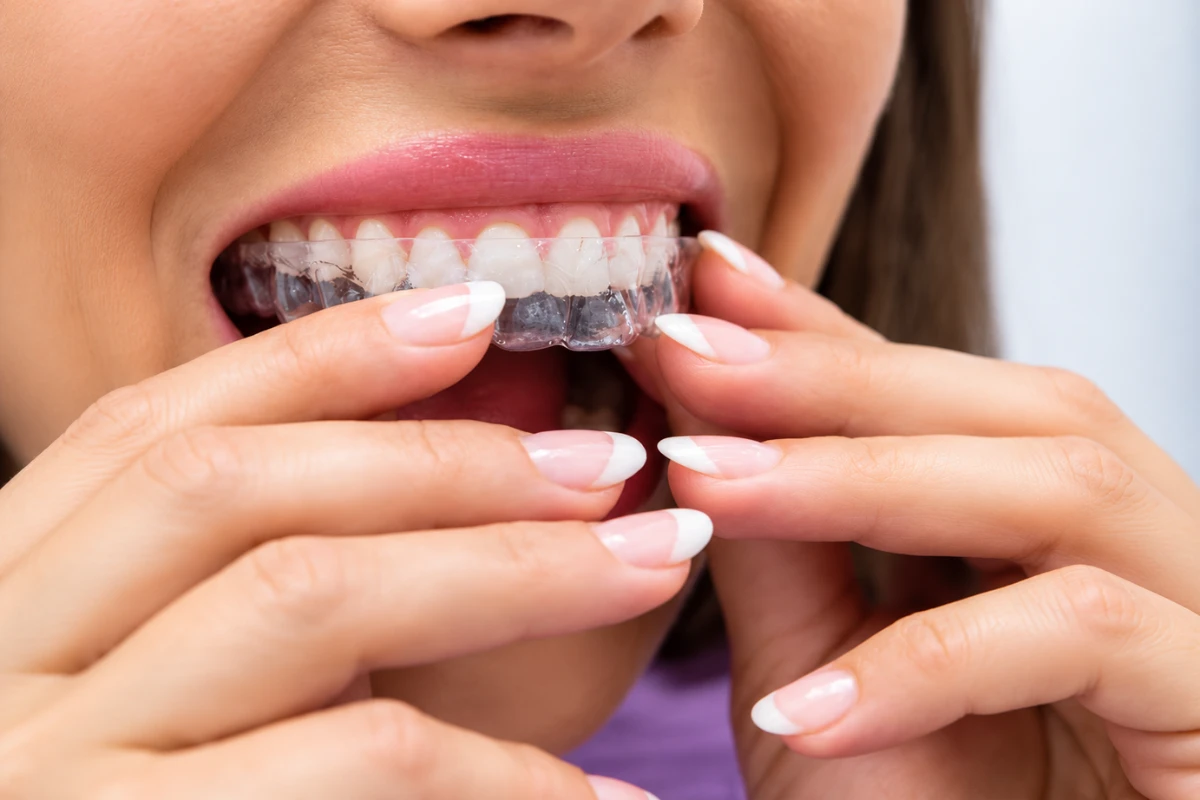
Clear Aligners are transparent, removable trays that gradually move teeth into better positions. They are custom-made for your teeth and changed at regular intervals as your treatment progresses.
They are often preferred by patients who want a more discreet orthodontic option.
Clear aligners are commonly used for:
- Mild to moderate crowding
- Gaps between teeth
- Minor bite correction
- Smile alignment
- Relapse after previous braces
- Patients who want a removable option
Because they are almost invisible, many people also refer to them as Invisible Braces.
What Are Traditional Braces?
Traditional braces use brackets and wires to move teeth gradually. The brackets are attached to the teeth, and the wire applies controlled pressure to guide the teeth into the correct position.
Braces are a reliable option for many types of orthodontic concerns, including complex cases.
Braces may be recommended for:
- Severe crowding
- Major spacing
- Rotated teeth
- Deep bite
- Open bite
- Crossbite
- Jaw alignment concerns
- Cases needing stronger tooth movement
Clear Aligners vs. Braces: The Main Difference
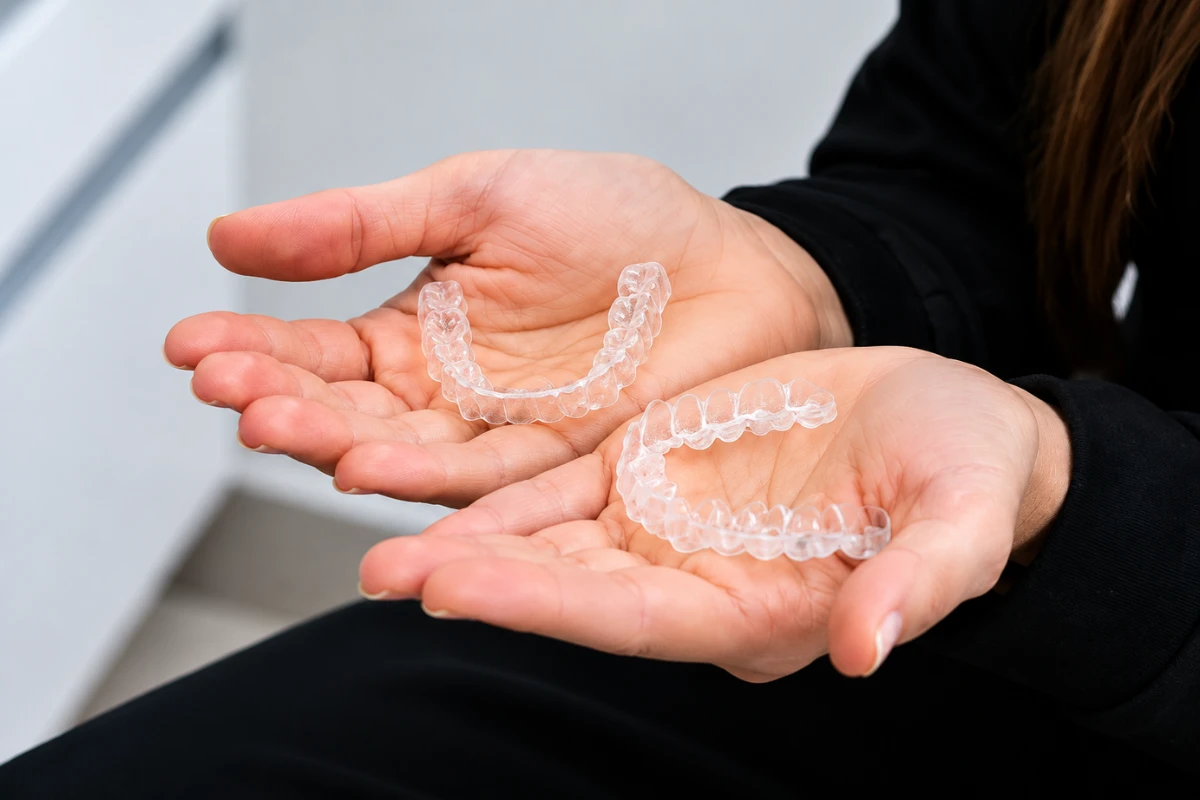
The biggest difference is that clear aligners are removable, while braces are fixed.
Aligners can be taken out while eating, brushing, and flossing. Braces stay attached to the teeth throughout the treatment.
This one difference affects comfort, food choices, oral hygiene, appearance, and discipline.
1. Appearance
Clear aligners are transparent and hardly noticeable when worn. This makes them popular among working professionals, college students, brides, grooms, and patients who do not want their orthodontic treatment to be obvious.
Traditional braces are more visible, especially metal braces. However, ceramic braces are a less noticeable option compared to metal braces.
If appearance is a major concern, Invisible Braces or clear aligners may be more suitable.
2. Comfort
Clear aligners are smooth and do not have wires or brackets, so they usually cause less irritation to the cheeks and lips.
Braces may initially cause soreness, ulcers, or discomfort due to brackets and wires. This usually improves as the mouth adjusts.
Both treatments may cause mild pressure or tightness when teeth start moving. This is normal and temporary.
3. Food Restrictions
With clear aligners, you have fewer food restrictions because you remove the trays before eating. You can keep eating most foods, as long as you brush before putting the aligners back in.
With braces, certain foods need to be avoided, such as:
- Hard foods
- Sticky foods
- Chewing gum
- Very crunchy snacks
- Foods that may break brackets or bend wires
For patients who do not want food restrictions, aligners may feel more convenient.
4. Oral Hygiene
Clear aligners make brushing and flossing easier because they are removable. You can clean your teeth normally and also clean the trays separately.
With braces, cleaning takes more effort because food can get stuck around brackets and wires. Patients need to be careful with brushing, flossing, and regular cleaning appointments.
Poor oral hygiene during braces treatment can lead to plaque buildup, staining, cavities, or gum problems.
5. Discipline and Wear Time
This is one of the most important points.
Clear aligners work only when they are worn for the recommended number of hours daily. If the patient removes them too often or forgets to wear them, treatment can slow down or become less effective.
Braces are fixed, so they work continuously. This makes them a better option for patients who may not be consistent with wearing aligners.
For teenagers or patients who may forget to wear trays, traditional Braces Treatment may sometimes be more reliable.
6. Treatment Time
Treatment time depends on the complexity of the case.
Mild alignment cases may be completed faster with clear aligners. More complex cases may take longer or may be better treated with braces.
Braces are often preferred when strong, controlled tooth movement is needed.
Your dentist or orthodontist will estimate the timeline after assessing your teeth, bite, and jaw relationship.
7. Effectiveness
Both aligners and braces can be effective when used for the right case.
Clear aligners are effective for many mild to moderate alignment concerns. However, they may not be ideal for every complex bite or tooth movement case.
Traditional braces are highly effective for simple as well as complex orthodontic corrections.
The success of treatment depends on diagnosis, planning, patient cooperation, and regular follow-up.
8. Follow-Up Visits
Clear aligner patients usually receive a series of trays and visit the dentist periodically to monitor progress.
Braces require regular adjustment visits to tighten wires, change elastics, and check tooth movement.
Both treatments need professional supervision. Skipping follow-ups can affect results.
9. Cost
The cost of clear aligners and braces varies depending on the case complexity, treatment duration, material used, and clinic protocol.
Clear aligners may cost more in some cases because they involve digital planning and custom tray fabrication.
Traditional braces may be more affordable in certain cases, especially metal braces.
However, cost should not be the only deciding factor. The right treatment should be based on what will safely and effectively move your teeth.
10. Lifestyle Convenience
Clear aligners are convenient for patients who want a flexible and discreet option. They are useful for people who attend meetings, events, photoshoots, weddings, or public-facing work.
Braces are better for patients who prefer a fixed treatment that does not depend on remembering to wear trays.
For busy patients in Thane, lifestyle can play an important role in treatment selection.
Clear Aligners May Be Better If You Want:
- A discreet treatment option
- Removable trays
- Easier brushing and flossing
- Fewer food restrictions
- Comfort without brackets and wires
- Aesthetic orthodontic correction
- A flexible option for work or social life
Traditional Braces May Be Better If You Need:
- Correction of complex tooth movement
- Fixed treatment
- Better control for severe crowding
- Bite correction
- Treatment that does not depend on wear-time discipline
- A more suitable option for younger patients
- Stronger orthodontic control
Are Invisible Braces the Same as Clear Aligners?
Many patients use the term Invisible Braces for clear aligners because they are transparent and difficult to notice.
However, invisible braces can also refer to other discreet orthodontic options, such as ceramic braces or lingual braces.
During consultation, your dentist can explain which option best matches your case and expectations.
Which Option Gives Better Results?
The best result comes from choosing the right treatment for the right case.
Clear aligners can give excellent results in selected cases, especially when the patient wears them consistently.
Traditional braces can give excellent results in simple and complex cases, especially where strong tooth movement or bite correction is required.
There is no one-size-fits-all answer. A dental examination, scans, X-rays, and bite assessment are important before starting treatment.
Final Thoughts
Both Clear Aligners and traditional braces can help create a healthier, better-aligned smile. Aligners are discreet, removable, and comfortable, while braces are fixed, reliable, and suitable for many complex cases.
If you are considering Braces Treatment, Clear Aligners, or Invisible Braces in Thane, visit Studio Dentiica by Dr Swati Thongire Gurav for a personalised orthodontic consultation.
Phone: 07400455007
WhatsApp: 7400455007
Book your consultation and choose the treatment that suits your teeth, lifestyle, and long-term smile goals.